Martin B. Interview: Prop Trading Psychology, Consistency, and a €4,000+ Payout
Funded Trader Interview
Martin B. Interview: Prop Trading Psychology, Consistency, and a €4,000+ Payout
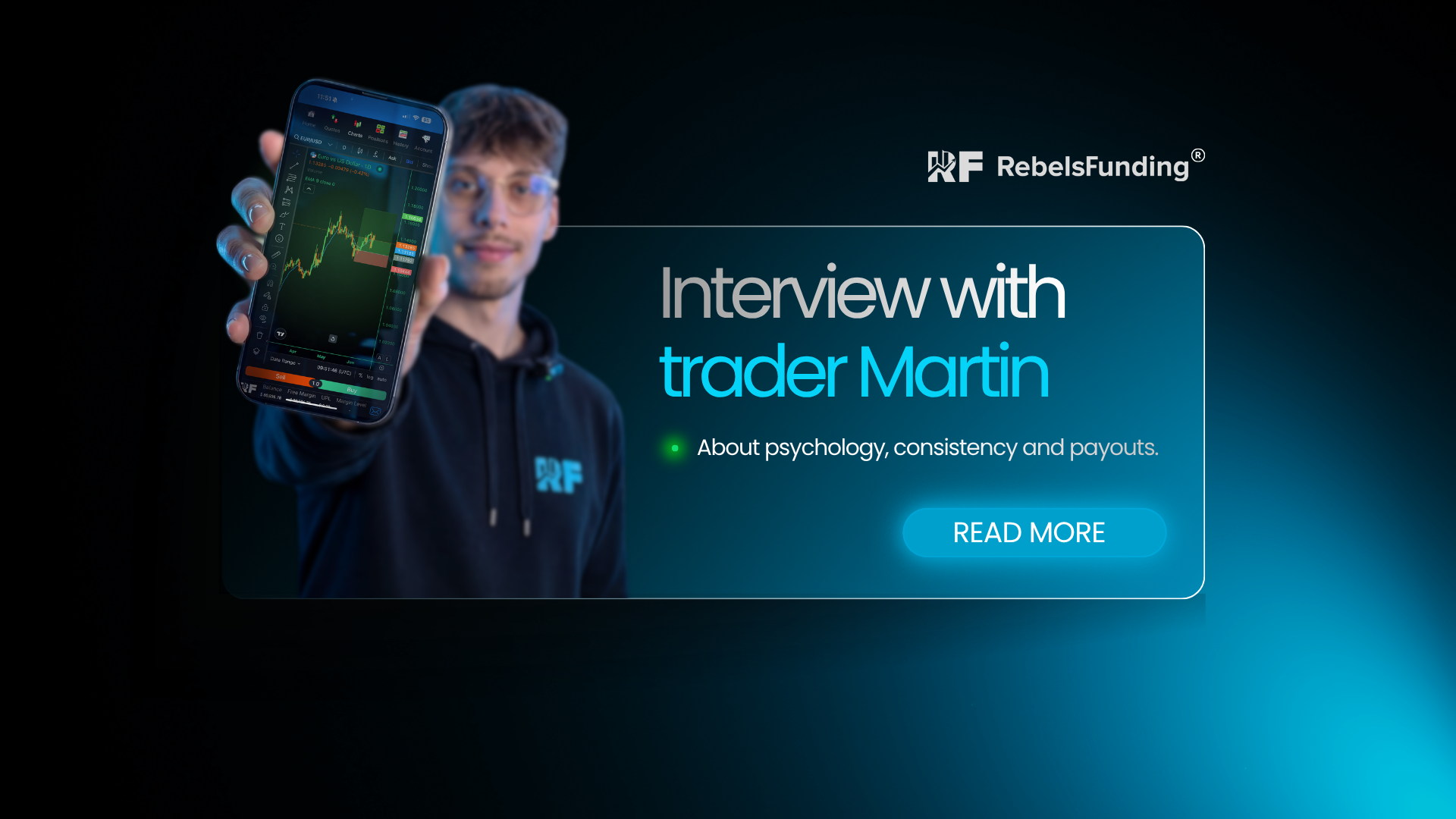
In this RebelsFunding interview, Martin B. shares how he moved from failed challenges to consistent performance, and why prop trading psychology became the key factor behind his results.
RebelsFunding Team • Funded Trader Interview • Trading Psychology
Quick answer
Martin B.’s journey highlights that prop trading psychology is critical. Consistency came only after he stopped switching strategies, fixed his risk, and focused on long-term results instead of short-term wins.
What is prop trading psychology and why does it matter?
Prop trading psychology is the ability to manage emotions, risk, patience, and execution under pressure. In practice, it often becomes the deciding factor between a trader who follows a plan and a trader who breaks rules after losses, boredom, or short-term frustration.
That is especially true in a prop firm environment, where traders must work within clear limits and performance objectives. If you are still learning the basics, it helps to first understand what a prop firm challenge is and how it works before going deeper into trader psychology.
How did your trading journey begin?
RebelsFunding Team: You’re still relatively young. When did you realize that prop trading could be a path forward, and how did you get into trading?
Martin B.: “My first contact with trading was in 2020. But I only started taking it seriously toward the end of 2021 and early 2022. I bought a course and decided to go deeper into it because it interested me from the beginning. Back then, I didn’t even know about prop trading. I was trading a small live account. It was only in 2023 that I discovered prop firms and realized that this could be the right path. Since then, I’ve focused only on this model.”
If you’re at a similar stage, it helps to understand how a prop firm challenge works before choosing your path. You can also explore the full RebelsFunding programs overview if you want to compare the available routes in one place.
What influenced your choice of program?
RebelsFunding Team: When choosing a program, what mattered most to you? Capital size, rules, or something else?
Martin B.: “It wasn’t planned that I wanted an 80K account. I actually burned many challenges before. I often bought even 40K accounts and failed them quickly. Getting the 80K account was more about timing and experience. What mattered more was finding one system and sticking to it. Before that, I kept changing strategies, and that just doesn’t work.”
Martin B.: “What I liked about RebelsFunding is that the programs are accessible. Especially something like the Copper program is affordable and teaches discipline. That’s where I started. Later, I moved to Bronze, and that’s where I finally succeeded.”
That progression matters. Many traders improve faster when the account path matches their current level rather than their ego. For readers comparing options, RebelsFunding also offers Silver, Gold 1-Phase, and Diamond, depending on how direct or structured you want the path to be.
Why many traders fail before they become consistent
One of the most important themes in Martin B.’s story is that progress did not come from immediate success. It came after failed challenges, repeated lessons, and finally finding one system he could trust. That is common in prop trading. Many traders do not fail because they lack intelligence or potential. They fail because they switch models too often, overreact to losses, and abandon structure too early.
If you want to improve that part of the process, it is worth reading how to pass a prop firm challenge and, if available in your content cluster, linking this interview with related education around discipline, drawdown, and consistency.
Was trading larger capital psychologically difficult?
RebelsFunding Team: Many traders think that managing an 80K account is mentally demanding. Was it the same for you?
Martin B.: “At the beginning, yes. But honestly, it was difficult even with small accounts. It’s just something new for your brain. Over time, after failing many challenges, I got used to it. Now it doesn’t really matter what number I see on the screen. What matters is my fixed risk per trade, around 1%.”
Martin B.: “I even tried a 320K challenge and failed it, but psychologically I handled it much better. Losing $3,200 on a trade felt easier than losing $400 in the beginning. It’s really about getting used to it.”
Key insight: In prop trading psychology, perceived pressure decreases as experience increases. Risk structure matters more than account size.
What led to your €4,000+ payout?
RebelsFunding Team: That’s a strong result. What do you think was behind it?
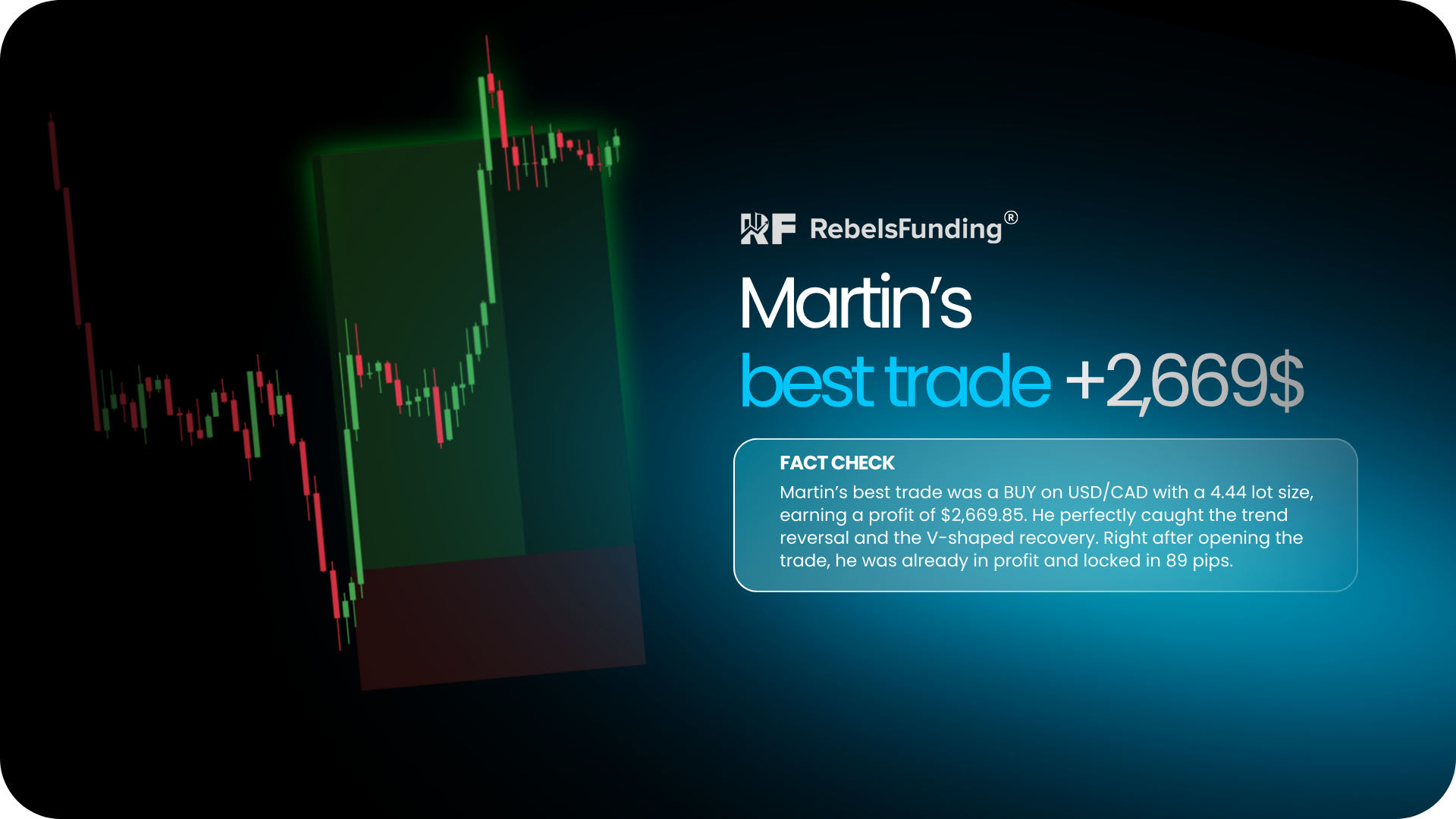
Martin B.: “It’s a mix of everything. You need a working system, but mindset is even more important. Maybe 70–80% is about psychology. You can have a great strategy, but if you don’t control your emotions, it won’t work.”
Martin B.: “Trades from boredom, overtrading, or emotional decisions can destroy your results. You might look at your month and realize that without those mistakes, your outcome would be much better.”
Why prop trading psychology matters more than strategy
Even with a profitable strategy, most traders fail because they cannot execute it consistently. Emotional decisions, overtrading, revenge trading, and the urge to recover losses quickly often destroy long-term results. Martin B.’s experience reflects a common pattern in funded trading: the edge may exist, but the trader still has to protect it through discipline, patience, and controlled risk.
This is why understanding trading discipline, drawdown control, and challenge rules is essential for long-term success. If you want to improve in these areas, you can explore our guide on how to pass a funded account challenge, which explains the key principles behind consistent trading performance.
Verified account
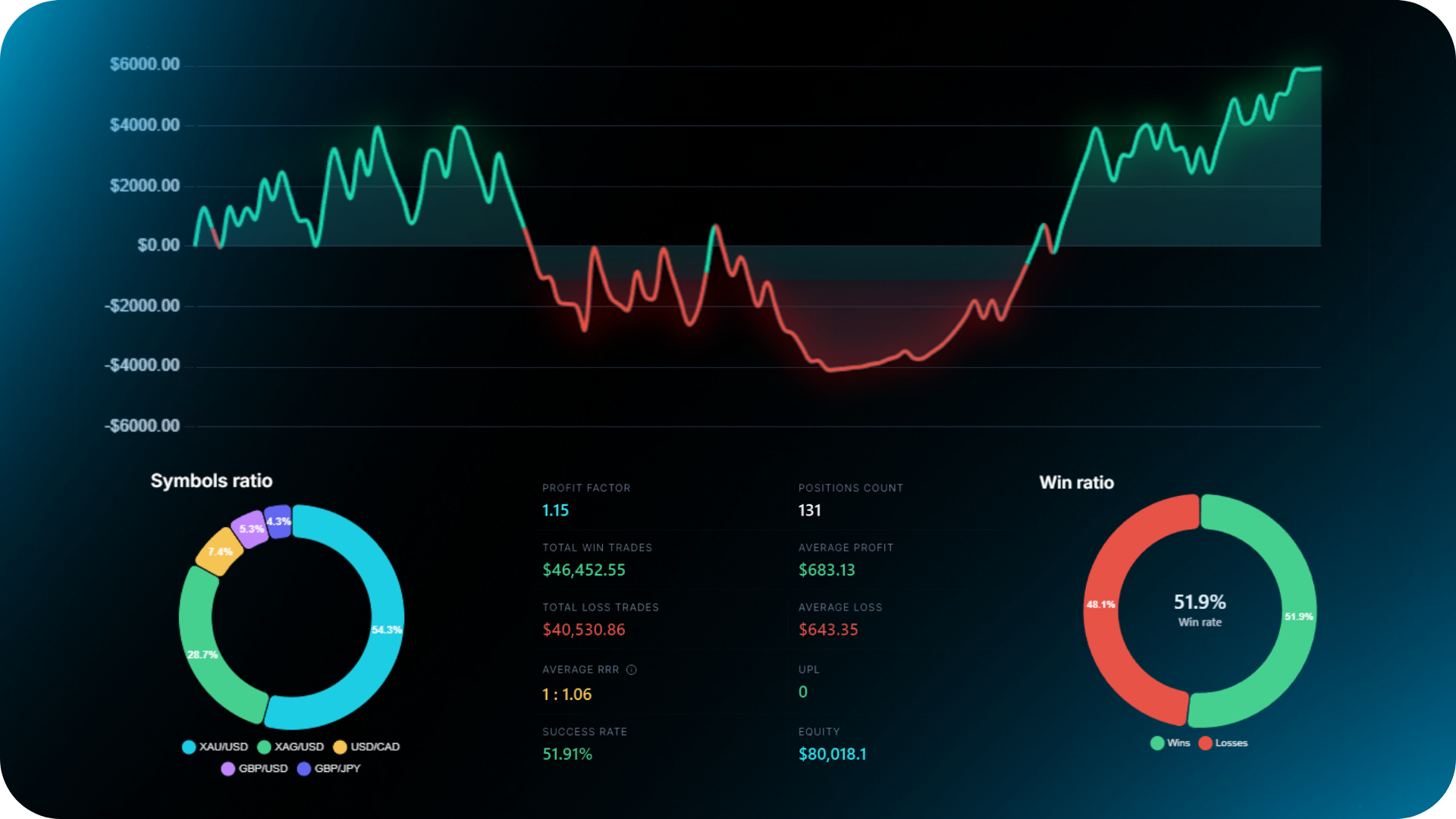
You can view Martin B.’s real account performance directly:
View account in RF Zone →To better understand this, you can read how to pass a prop firm challenge and how to manage risk properly. It also makes sense to continue through the broader RebelsFunding blog if you want more educational content around trader development.
How beginners can build better trading discipline
For most beginners, the first goal should not be speed. It should be repeatability. That means following one model, accepting that losses are part of the process, and not treating every single trade as proof of identity. A better framework is to focus on process first and outcome second.
If you want to experience that environment before committing to a full program, RebelsFunding also offers a Free Trial. Traders who prefer a more competitive testing format can also look at the Competition.
What advice would you give beginners?
RebelsFunding Team: If you had to give one honest piece of advice to someone starting out, what would it be?
Martin B.: “Don’t give up. The beginning is hard for everyone. It takes time. Work on your skills and your mindset. Don’t expect to get rich in a month.”
Martin B.: “Also, don’t think you need to be right in every trade. That’s not possible. Focus on long-term statistics. And don’t revenge trade after mistakes. Calm down and follow your plan.”
If you want to experience the environment before committing, start with a structured approach.
Start Free Trial
FAQ
Is prop trading mainly about strategy or psychology?
Both matter, but psychology often determines whether a strategy is executed properly. A good system still requires emotional control, patience, and discipline.
Do most traders fail before succeeding?
Yes. Many traders go through multiple failed challenges before reaching consistency. Martin B.’s experience reflects that reality clearly.
Should beginners start with smaller accounts?
Starting smaller can help build discipline before scaling to larger capital. That is one reason lower-entry programs can be useful in early development.
Why does prop trading psychology matter so much?
Because most trading mistakes are not purely technical. They come from emotional decision-making, impatience, overtrading, and poor reaction to losses.
What is a good first step before buying a challenge?
A good first step is learning the rules, comparing account paths, and testing your approach in a lower-pressure environment such as a Free Trial.

Join Our Traders
 Can Prop Firms Refuse a Payout? What Traders Should Check First
PAYOUT RULES GUIDE A payout request is not only about profit. It…
 Static Stop Loss vs Trailing Stop Loss in Prop Trading: What Traders Must Know
PROP TRADING RISK GUIDE Stop-loss settings can strongly affect how traders manage…
 From Zimbabwe to 16 Payouts: How Bazell Built Consistency with RebelsFunding
FUNDED TRADER INTERVIEW From Zimbabwe to 16 Payouts: How Bazell Built Consistency…